Every booked keynote has a moment the audience never sees: a planner, assembling an event under deadline, deciding which speaker makes her job easier. Talent gets you considered. Materials get you chosen. The speaker whose bio drops perfectly into the program, whose photos are print-ready, whose talk description makes the marketing email write itself, that speaker is simply easier to book than the equally talented one whose assets require a week of email tag.
Your media kit is that ease, packaged. Here is how to build one that works as hard as you do on stage.
What a media kit actually is
A speaker media kit is a curated set of professional assets that lets an event planner evaluate you quickly and promote you well. It typically lives in two forms: a page on your website where everything can be viewed and downloaded, and a designed PDF you can attach to an inquiry reply. Both should exist, because planners work both ways, and both should carry the same visual brand as your website so everything about you feels like one deliberate presence.
The kit is not a scrapbook. Every item earns its place by answering a planner's question or saving her a task.
The essentials, in order of importance
Your bio, in three lengths. A one-liner for programs, a short paragraph for emails and introductions, and a fuller version for websites and press. Write them in third person, lead with what makes you distinctly bookable, and keep them current. Planners copy and paste bios verbatim; hand them exactly what you want said about you.
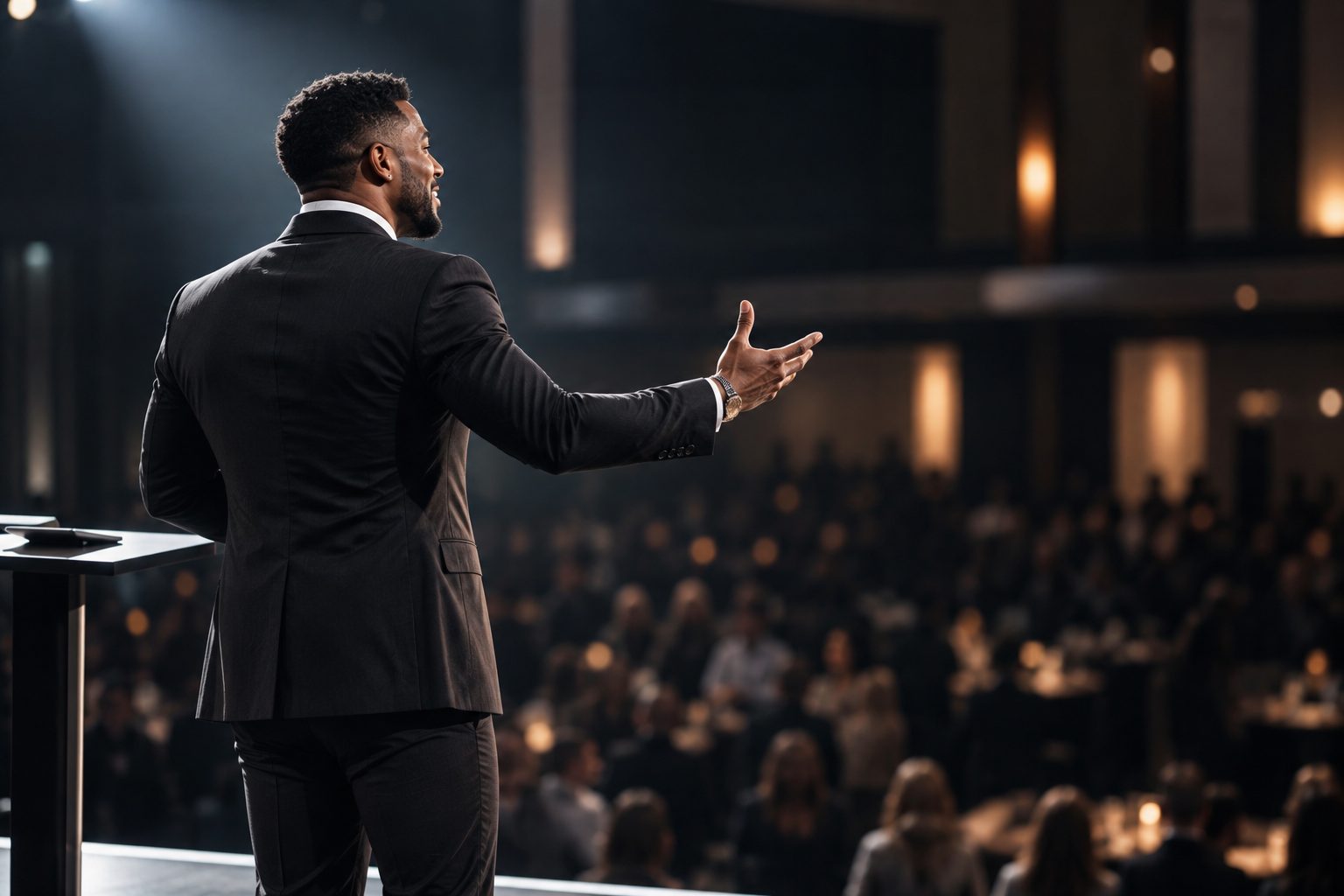
Professional photography. At minimum: a current headshot in high resolution, a couple of alternate portraits, and genuine stage photos showing you in front of a real audience. Stage shots do double work, portraying both your presence and the fact that you have one. Label the files sensibly and provide them in sizes that survive print.
Your signature talks. For each: a strong title, a description written around what the audience gains, ideal formats and lengths, and who it is for. This is the heart of the kit; it is what gets forwarded to the committee. Outcome language wins here, because the planner will reuse your words to sell the session internally.
Your demo reel or talk footage. Link it prominently. If the kit is a PDF, put the link where it cannot be missed. No single asset moves a booking decision more than video.
Credibility markers. Past stages and organizations, media appearances, your book if you have one, and testimonials, ideally from planners and organizers, with names and roles. Real quotes only, always. A short list of genuine credits outperforms a long list of padded ones, because planners are fluent in padding and allergic to it.
An introduction script. A short, ready-to-read intro for the emcee. Almost no speaker includes one; every planner appreciates it, and it guarantees the first words the audience hears about you are the right ones.
The details that signal professionalism
Logistics and requirements, stated simply. Where you travel from, what formats you offer, anything you need on site. You are not writing a rider; you are preventing the fourth clarification email.
Contact and booking information on every page or section, because kits get forwarded and separated from their original email.
Design quality throughout. The kit is a preview of your standards. Clean typography, generous space, your brand's palette, and consistent formatting tell the planner that everything you touch, including her stage, will be handled with care. A cluttered document whispers the opposite, whatever your reel says.
Where the kit lives on your website
A dedicated speaker kit or media page is one of the highest-value pages a speaking site can have. Planners look for it by name. It should present everything above in a scannable layout, let each asset be downloaded individually, and offer the whole package as one file. This page is also where referrals get converted: when someone recommends you to a colleague, this is the page that gets sent, so it must stand alone as a complete case for booking you.
Keeping it on your site rather than only in email attachments has a compounding benefit: it is always current. The version-control problem of outdated PDFs circulating for years disappears when the canonical kit lives at one link you maintain.
Tailoring without rebuilding
You do not need a different kit for every inquiry, but small tailoring pays. Leading with the most relevant talk for that event, choosing the testimonial from a similar audience, referencing the industry in your cover note. The structure stays constant; the emphasis moves. Speakers who do this convert more inquiries not because the materials are different, but because the planner feels seen, which is precisely the skill she is hoping you will bring to her audience.
Keep it honest, keep it fresh
Update the kit on a rhythm: new stages, new photos, new footage, retired talks removed. An obviously current kit signals a working speaker in demand. And resist every temptation to inflate, borrowed logos, inflated audience numbers, quotes that were never quite said. The speaking world is small, planners talk, and your materials are only as valuable as the trust behind them. The honest kit, well designed, is the durable one.
The kit as a positioning exercise
Something useful happens while building a media kit that has nothing to do with planners: it forces clarity. Writing three bio lengths makes you decide what actually leads your story. Choosing signature talks makes you retire the five loosely related topics into two you can own. Selecting testimonials shows you which audiences respond to you most, which is often a surprise worth acting on. Many speakers finish the kit knowing their positioning better than they did after years on stage, and that clarity flows backward into everything: the website copy sharpens, the talk titles strengthen, even inquiry conversations get easier because you finally have settled language for what you do.
So treat the kit as strategy, not paperwork. If assembling it feels hard, that difficulty is diagnostic; it means the positioning underneath needs the work first, and doing that work is what separates speakers who get booked from speakers who get considered.
The ease dividend
Here is what changes when your media kit is truly done: inquiry replies take minutes instead of evenings. Planners promote you accurately and beautifully because you made it effortless. Referrals travel with a complete case attached. And in the final comparison between you and a similar speaker, the practical question, who will be easier to work with, has already been answered in your favor by every polished, ready, findable asset you provided.
Start where you are. A complete, honest kit built from today's assets, this season's photos, your best current footage, the stages you have actually stood on, beats the perfect kit you keep postponing until after the next big engagement. The next big engagement is likelier to arrive because the kit exists.
The Agency builds speaker brands as one system: positioning, website, and the media kit that carries your value into every planner's inbox, all in a single coherent design. If your materials have not caught up to your stage presence, reach out through the contact page, and The Agency will be in touch.