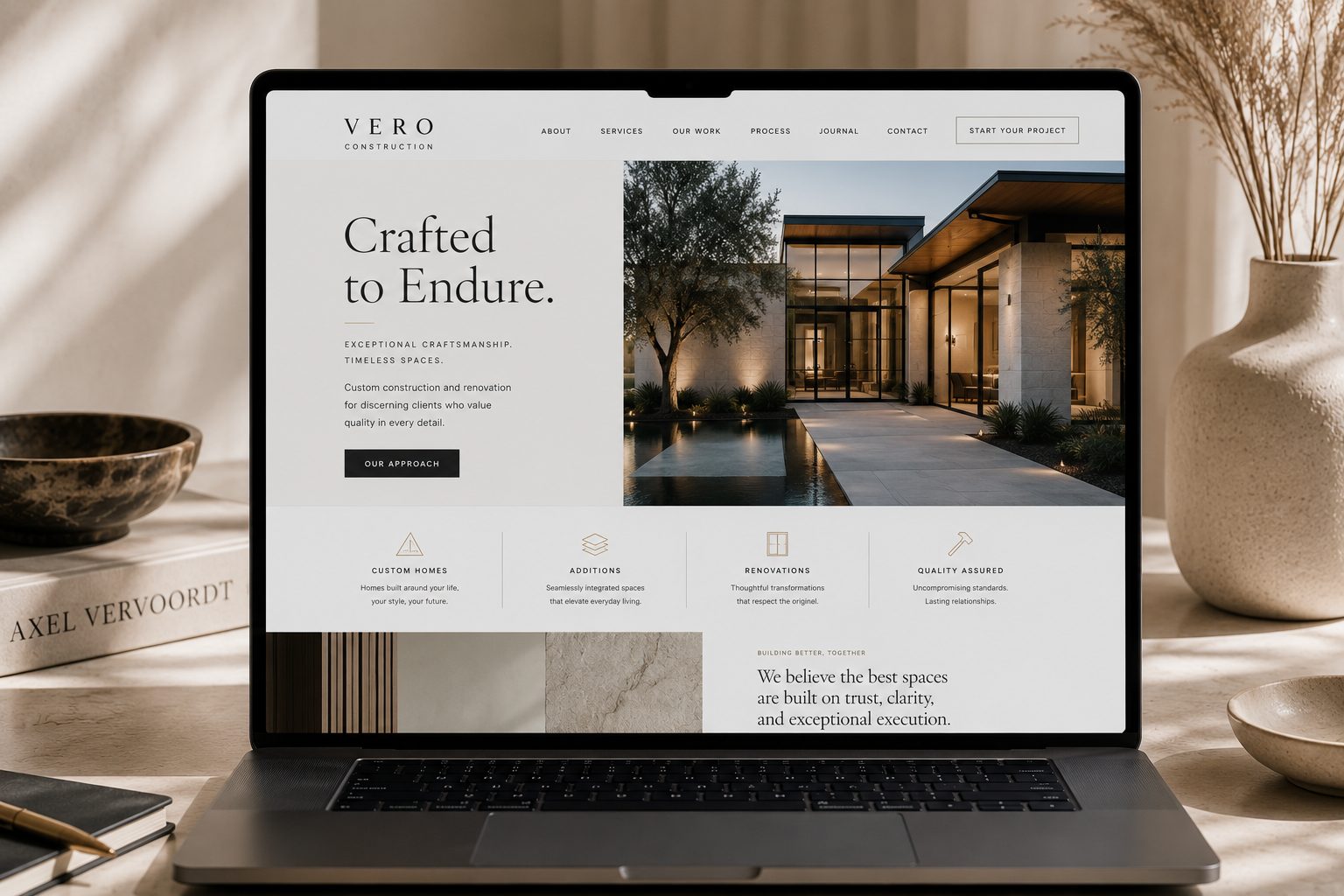
There is a version of the construction business that used to be true: work came from reputation, reputation traveled by word of mouth, and a website was a formality at best. The first two parts are still true. Reputation still wins the work. What changed is where reputation gets checked. Today, when a homeowner gets your name from a neighbor, or a general contractor gets it from a supplier, the very next step is a search. Your website is now the place where word of mouth either gets confirmed or goes quiet.
For contractors, this is actually good news, because most of your competitors are doing very little with it. In a market where the average trades website is a decade old or missing entirely, a professional web presence is one of the cheapest competitive advantages available.
The math of better bids
Think about which jobs you would rather win: the price-shopped three-bid project where the lowest number takes it, or the project where the client already wanted you before you quoted. Those second projects, the ones with healthier margins and easier clients, come from trust that arrived ahead of the estimate.
A professional website builds exactly that kind of trust at scale. When a prospect has browsed your finished projects, read real reviews, seen your licensing and insurance stated plainly, and gotten a feel for how you run jobs, your bid is no longer a number on a page. It is a number attached to a company they already believe in. That belief is worth points of margin, because clients pay more to reduce risk on the biggest purchases of their lives.
What homeowners are checking for
Homeowners bringing a contractor into their home are managing one dominant feeling: risk. Everyone knows a renovation horror story. Your website's job is to answer the unspoken questions behind that fear.
Is this a real, established company? A professional site with your history, your team, your service area, and your licensing and insurance information answers this immediately. So does design quality itself: a clean, current website signals a business that is organized and here to stay.
Can they do the kind of work I need? A project portfolio, organized by type, with quality photos and short write-ups about what each project involved, lets prospects find their project in your past. Before-and-after images are especially persuasive in remodels, where clients struggle to imagine the outcome.
What is it like to work with them? Real customer reviews, presented with names and project types, answer this in the customer's own voice. So does a simple page explaining your process from estimate to final walkthrough. Clients fear chaos more than cost; showing them a process says there will not be any.
What commercial clients and GCs are checking for
If part of your business is commercial or subcontract work, the audience changes but the check still happens. General contractors and facility managers verifying a sub want evidence of capability and reliability: relevant project experience at scale, bonding and insurance capacity, safety posture, years in business, and the sense that your operation is professional enough to not create problems on their schedule. A website that speaks to this audience directly, even with just one solid commercial page, sets you apart from subs who exist only as a phone number.
Being found for the work you want more of
Beyond confirming referrals, a well-built site brings in work you would never have heard about. Nearly every project starts with a local search: a service plus a city. A site with a dedicated page for each core service, written plainly and connected to your service area, gives search engines something to rank. Pair that with an active Google Business Profile and a steady flow of genuine reviews, and you begin appearing at the exact moment someone nearby needs what you do.
Here is the strategic part: your website can be aimed. If you want more kitchen remodels and fewer small repairs, build the site around kitchens: the portfolio, the service pages, the reviews you feature. Contractors rarely think of their website as a steering wheel for the kind of work that comes in, but that is precisely what it is.
Keep the contact path job-site simple
Prospects reaching out to contractors want two things: an easy way to describe their project and a sense of when they will hear back. A short request-a-quote form, your phone number visible on every page, your service area stated clearly, and a note about response time cover it. Skip the ten-field forms; every extra required field costs you inquiries from busy people. And make sure all of it works flawlessly on a phone, because that is where homeowners are browsing and where you are answering.
Photos are your inventory
One habit pays for itself more than any other: photographing your work. Every completed project, shot decently in good light, becomes website material, review-request material, and proof for the next bid. Contractors sit on years of finished work with nothing to show for it but memory. A professional site gives all of that craftsmanship a permanent, findable home, and the discipline of adding each new project keeps the site alive in search results.
Recruiting: the second audience on your site
There is another visitor checking out your website with serious intent: the experienced carpenter, operator, or project manager deciding where to apply. Skilled labor is the scarcest resource in the trades, and candidates research employers exactly the way clients research contractors. A site that shows well-run projects, a real team treated with visible pride, and a simple careers page does quiet recruiting work all year. Many contractors have won their best hires this way without realizing the website did the first interview. When you build the site for clients, spend one extra page on the people you want on the crew; it may end up the highest-return page you own.
The bar is low and the payoff is not
In most trades and most markets, the online competition is thin: outdated sites, missing portfolios, no reviews strategy. This means a contractor who takes the web seriously does not need to outspend anyone. A professional site, honest reviews, and a maintained profile put you in the top tier of your market's online presence almost by default, and the projects that come from it are the better kind: clients who chose you, not your price.
If you want a simple test of where you stand today, search your trade and your town the way a homeowner would, on your phone, tonight. Look at who appears, what their reviews say, and what their sites show. Then look yourself up by name and imagine you are the neighbor who just got your number. That fifteen-minute exercise tells you more about your marketing position than any report, and it usually makes the next step obvious.
The Agency builds contractor websites with exactly this in mind: portfolio-forward design that shows the caliber of your work, service pages structured to be found locally, and a contact path that turns evening research into morning phone calls. Builds typically run six to eight weeks from kickoff, with everything delivered ready to work.
If your craftsmanship deserves better representation, reach out through the contact page, and The Agency will be in touch.